
钱塘老娘舅
如何用AI帮助炒股系列(一):投资中,AI 大模型能干什么,不能干什么?_我的网站

一 |
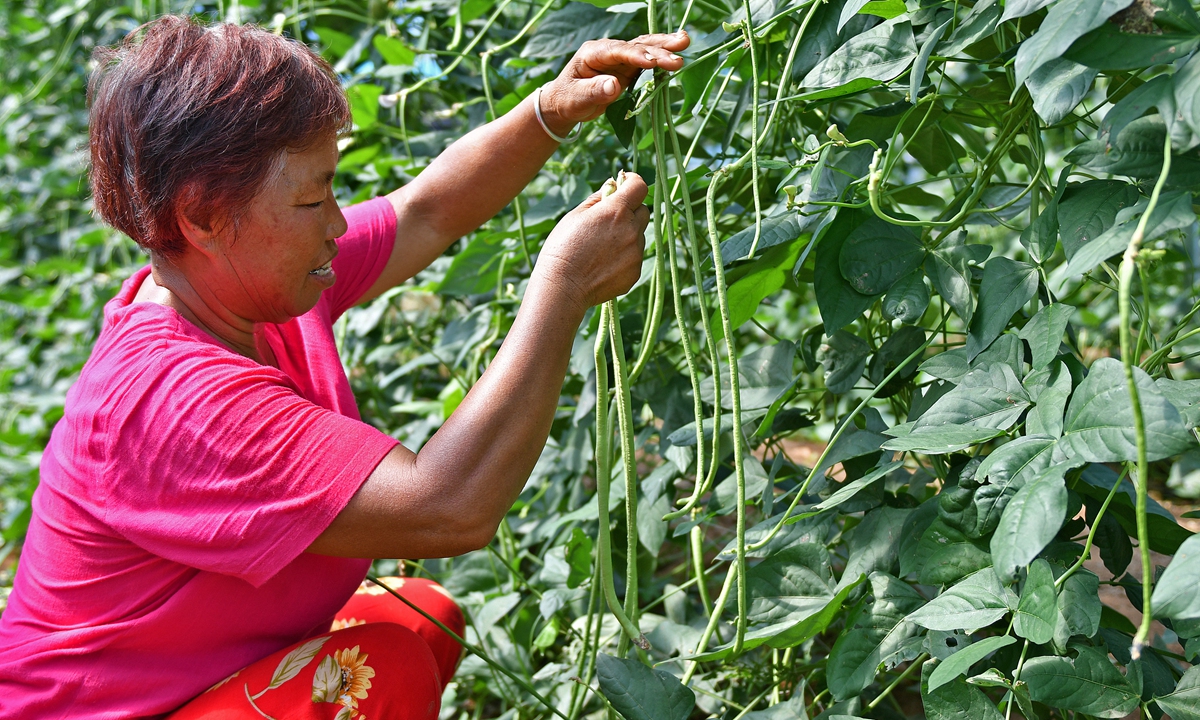
For residents of East China's Shandong Province, however, green beans have never been a miracle diet food or an internet meme. Instead, they are an unmistakable sign that summer has arrived — and, for many families, the beginning of weeks of eating them, giving them away and wondering how on earth there are still more waiting to be picked.
The season of endless beans
For Zhao Qian, a Shandong native, summer has always had a familiar color: green.
"When I was little, the moment different bean dishes started appearing on the table day after day, I knew summer had arrived," Zhao told the Global Times. "No matter how many we ate, there were always more. It was as if the vines kept producing beans overnight."
A Chinese saying goes, "Eating beans in summer is better than eating meat." Heat-loving green beans have been cultivated in China for more than one thousand years. Originally introduced from abroad, they gradually found a permanent place on Chinese dining tables thanks to their versatility, nutritional value and ability to fill hungry stomachs, according to an article published by People.cn.
Today, with the rise of greenhouse farming and an increasingly sophisticated cold-chain logistics network, fresh vegetables are available year-round across China. The old rule of eating produce only in season has largely given way to year-round abundance. Yet in Shandong, China's largest vegetable-producing province, green beans remain inseparable from summer. More than an endless seasonal harvest, they have become the taste of home for generations of locals.
One of Zhao's strongest childhood memories wasn't eating the beans, but preparing them.
"Every summer, the adults would hand me a basin full of freshly picked beans and ask me to strip off the tough strings along both sides," she recalled. "I'd sit on a little stool and work through the whole pile. It looked like an easy job, but after peeling bean after bean, my fingertips would start to hurt. By the time I finished one basin, there was always another one waiting."
For many families in Shandong, summer means an endless cycle of picking, eating and sharing green beans. In vegetable gardens, rows of trellises are soon covered in climbing vines. When the peak harvest season arrives, the beans need to be picked almost every day before they become old and fibrous. Those that cannot be finished at home are packed into bags and given to relatives, neighbors and friends.
"Your family has beans, and so does mine, but we still give them to each other," Cao Yu, a Shandong native who grew up on the Jiaodong Peninsula in East China, told the Global Times on Wednesday with a laugh.
A plentiful harvest also brings what locals jokingly call "bean freedom" to the dinner table. Sesame-dressed beans, braised beans with pork ribs and, above all, bean-filled steamed buns — a dish mentioned by almost every Shandong native interviewed by the Global Times. For many people, these dishes are no longer simply seasonal food, but the familiar taste of summer, family and hometown.
The hands that harvest summer
Behind the seemingly endless harvest is another busy summer ritual — picking. For many elderly farmers, harvesting green beans means spending hours each day moving from one trellis to another, reaching through dense vines and picking bean after bean by hand.
A nail salon in Jining, Shandong Province, recently went viral after offering free "bean-picking manicures" to residents aged 60 and above. Instead of fashionable designs or glittering decorations, the salon applies thicker, longer nail extensions that make it easier to pinch and snap off the beans while protecting fingertips from pain. A coat of colored polish is added simply to help conceal stains left by vegetable sap, according to video clips circulating on Chinese social media platforms Douyin and Sina Weibo.
The salon owner, herself the daughter of farmers, said thumb injuries and damaged fingernails are common during the bean-picking process. In videos posted on her Douyin account, many elderly women said the manicures made picking beans much easier. Even more amusingly, some older men initially refused to get a manicure, only to change their minds after hearing enthusiastic recommendations from the "grandmas' group."
For perhaps the first time, beauty took a back seat to practicality, and a manicure became another way of caring for hardworking hands.
While the internet continues to joke about undercooked beans as a shortcut to weight loss, doctors stress there is nothing amusing about eating them raw. Liang Jiajing, a clinical nutritionist at the Second Affiliated Hospital of Anhui Medical University, said raw or undercooked beans contain naturally occurring toxins that can cause nausea, vomiting, abdominal pain and diarrhea, but the toxins are destroyed through thorough cooking, according to a Jimu News report.
The internet may remember green beans as the latest viral "weight-loss hack." In Shandong, however, they tell very different stories — one of overflowing harvests, bags of beans exchanged between neighbors, family recipes passed down through generations, and hardworking hands that quietly bring the harvest to the table. Long after the online jokes fade, the taste of summer — and of home — remains.
。 让 AI 大模型每天给你推荐股票,躺赢? 很多朋友这样试过,偶尔有惊喜,但时间一长,发现没那么容易。 来看一篇严谨的学术跟踪论文,2026年4月份刚出炉: 发布机构挺权威,NBER ( 美国国家经济研究局)。 直接说结论:研究团队使用ChatGPT5.0、5.2 版本,Claude、Gemini,Grok 在内的主流模型,每天开盘前提问:推荐一篮子能跑赢标普500指数的股票。收集持仓建议和每日调仓建议。 跟踪了一年时间,结果是:收益平庸,波动很大。

二 | 6 个月超额收益是 1.7%;但如果用 DGTW 特征基准(去掉整体市场风格变化因素)做调整,基本上就没啥优势了。AI 组 合平均 beta 达到了1.6。且换手率最高达到了每天 9%——隔天就要换掉一成仓位。 这跟很多朋友使用 AI 模型后的直觉对上了:第一天你可能惊艳,第三天很可能失望。 “AI 荐股不能跑赢市场”背后的根本原因是: AI 不是在思考,是在跟风。 穿透看,AI 选股的逻辑,目前看是跟着媒体曝光度走:谁被媒体曝光率高,就选谁。

三 | 让 AI 帮忙直接推荐,会发现推荐的股票雷同,集中度很高,经常换手,且选股并不聪 明。结果也很平庸。
四 | 问题来了:知道大模型做不了什么,那么就意味着它在个人投资方面,可以放弃了 吗? 也不是,它有干不了的,也有很擅长的。 比如,大模型最大的优势是,闪电阅读长文,输出要点。 这解决了个人投资者的一个痛点:想读财报,深入了解一家上市公司,但是读不懂。财报太长,动辄几十页,长的上百页。

五 | 信息复杂,专业术语堆积,很难搞。 繁重的活,本来就不是人干的。 AI 能帮普通投资者,补这部分短板。 本文为妙投付费内容,上述仅为摘要,购买本专栏即可解锁完整内容。新用户可免费领本专栏7天阅读体验机会,在妙投APP-我的-权益兑换 输入“妙投888”即可领取。
Current article:http://e07.tichannangenzhuchuapin.cfd/ghaqi/20260826/806632.html
Published on:21:54:36
下一篇:Chinese Guzheng artist He Beibei wins Hollywood Independent Music Award
 5岁萌娃与民警老爸吃饭,默契配合抓网逃
 为国产机器人开辟出海通道
 中国发布第五批50个公共数据“跑起来”示范场景,中国发布第五批50个公共数据“跑起来”示范场景
 Ajay Devgn’s Dhamaal 4 Set to Avoid March 2026 Clash With Dhurandhar 2
 外国媒体新闻:AMD 300/400系列AM4主板或PCIe 4.0可以通过BIOS升级
 “红灯停表”实施近一月:苏州外卖骑手闯红灯率下降 27.5%,事故率下降 12.4%
- ·Free village swimming pool becomes summer hotspot for children in east China
- ·VIO APEX II确认:神秘设备编码“水滴”
- ·Rajinikanth's Padayappa Re-Release Crosses Rs 12 Crore Collections Worldwide
- ·"물만 마셨는데 펭귄처럼 걸어요"...보름 만에 20㎏ 빼려다 뇌 손상 온 30대女 [헬스톡]
- ·【芸能 覆面座談会】米倉涼子 不起訴も難しい地上波復帰
- ·中国男篮惜败无缘亚洲杯四强
- ·首批基金2026年中期报告出炉,看好有色、脑机接口等方向
- ·缅甸警方捣毁电诈赌博团伙,16名中国人涉案被抓!使馆回应
- ·普理查德:既要全力奋战 也要做好场上阅读判断
- ·房子“会呼吸” 节能超九成
- ·新华社消息丨上海出台楼市“沪八条”
- ·盛会赋能,盛境出圈!全国避暑文旅大咖团实地考察腾龙洞,点赞利川清凉文旅实力
- ·全市规划资源系统迎战强降雨做好地灾防范
- ·SNAP面临着集体诉讼:原因是为了隐瞒IPO的真实生活。
- ·中欧国际工商学院副院长丁远:深化“碳中和”,平等对话合作尤为重要
- ·绿茵之外 微光正暖 “顺心顺意 即刻精彩”龙江体彩公益活动圆满收官
- ·新西兰用什么来欢迎中国外交部长?
- ·辐射 4 发布补丁更新 Creation Kit,修复 Steam Deck 崩溃等各类问题
- ·UP News: तीन दिन में 16 हजार से अधिक युवाओं को मिली नई उड़ान, रोजगार महाकुंभ में मिला रोजगार
- ·德国特斯拉工厂遭大规模袭击,数百人与警察扭打一起,场面十分混乱
- ·爱德华兹:夺冠需脚踏实地 正努力磨合新阵容
- ·严重“爆表”!一女子体内抽出“牛奶血”
- ·Remembering Sushant Singh Rajput: A Star Who Still Shines
- ·中信期货:PX成本松动,供需同升阶段跟随油价波动
- ·让二追三!十人胜利3-2逆转达曼协作,马内双响,C罗半场被换下
- ·Throwback: “I Have Lived My Life to The Fullest” – Dharmendra
- ·部分 iPhone 用户在升级 iOS 16 正式版后无法更新 App,现已修复_Store_问题
- ·专家称,梅根夫妇的“小丑秀”让王室处于危险境地,王室不会轻易放过其
- ·घर आई मीडिया पर क्यों गुस्साईं Sunita Ahuja? तलाक की खबरों के बीच पति Govinda संग किया गणपति का स्वागत
- ·新票登场好运来袭!顶呱刮新票“顺”火热上市
- ·China crackdown on cyber scams nets thousands but leaves networks intact
- ·兴城市妇联为高龄老人送温暖